The Bowling Mental Game
Bowling is a physical game, but most league matches or tournaments are won or lost in your head.
You can have a smooth approach, a reliable release, and good pocket percentage, and still fall apart when the pressure is on or after a bad frame.
This is what separates consistent bowlers from streaky ones. Not talent. Mental discipline.

Composure before every shot is a skill you can develop. It does not happen by accident.
Why the Mental Game Matters More Than You Think
In a ten-frame game, you throw between 12 and 21 balls. Each one is its own event. What happened on the last frame — a strike, a split, a missed spare — has no bearing on what you are about to throw.
But your brain does not always see it that way. A bad frame can trigger tension, frustration, or rushed mechanics. A great run can build pressure as you try to protect it.
Both reactions hurt your game. The goal is to stay level, fully engaged but not emotionally reactive.
Every ball is a fresh start. Train yourself to treat it that way.
Composure Between Frames
The time between frames is where most mental mistakes happen. You are sitting down, replaying a bad shot, getting tense about a split, or drifting out of focus entirely.
Elite bowlers use that time productively. They observe lane conditions, think about adjustments, and prepare mentally for the next shot, then let it go.
- Note what the lane is doing. Is it hooking more or less than earlier?
- Decide on one adjustment if needed — board, speed, or target
- Clear the last frame from your mind before you step up
- Take a breath and commit to the shot you have decided to throw
Decide. Commit. Execute. That is the routine.
How to Reset After a Bad Frame
Everyone throws bad shots. Even professionals miss the pocket, leave splits, and miss spares. The difference is how quickly they move on.
Dwelling on a mistake tightens your mechanics. You grip the ball harder, rush your footwork, or change your target without a clear reason. The result is usually another bad shot.
A reset routine helps. It does not need to be complicated.
- Acknowledge the shot briefly, good or bad, then close it
- Walk back to your seat without carrying the emotion onto the lane
- Focus on process, not outcome. Your job is to execute the shot, not control where the pins fall
- Use your pre-shot routine as an anchor to bring you back to neutral
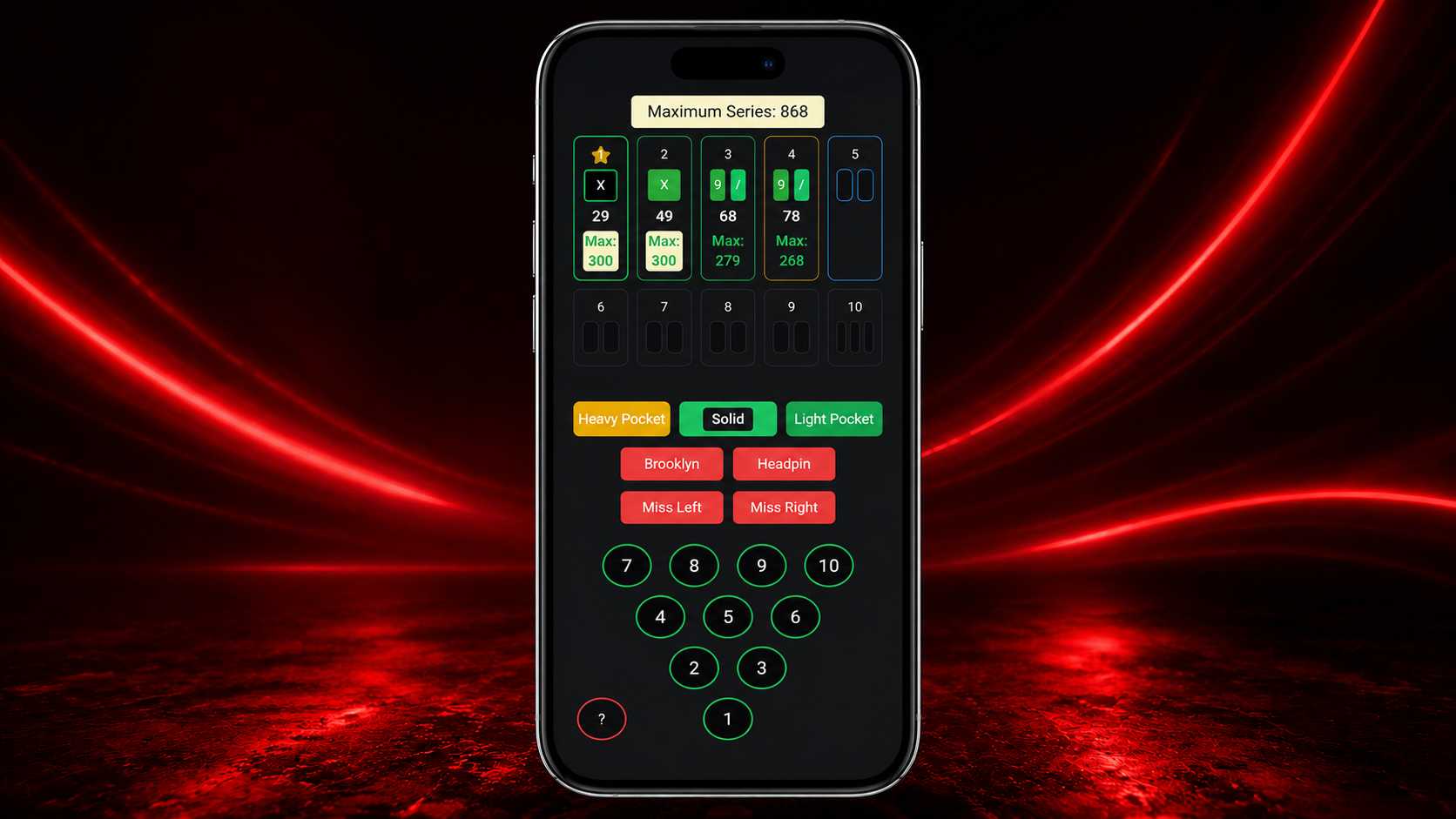
Tracking your shots in real time with the KB App keeps your focus on execution, not just the scoreboard.
Use Data to Take Emotion Out of It
One of the most practical tools for improving your mental game is tracking your shot quality honestly over time.
When you know your pocket percentage across 20 games, a single missed pocket shot does not feel like a crisis. It is just a data point. You have the context to judge whether it is a pattern worth addressing or a one-off that means nothing.
That context is calming. It makes you harder to rattle.
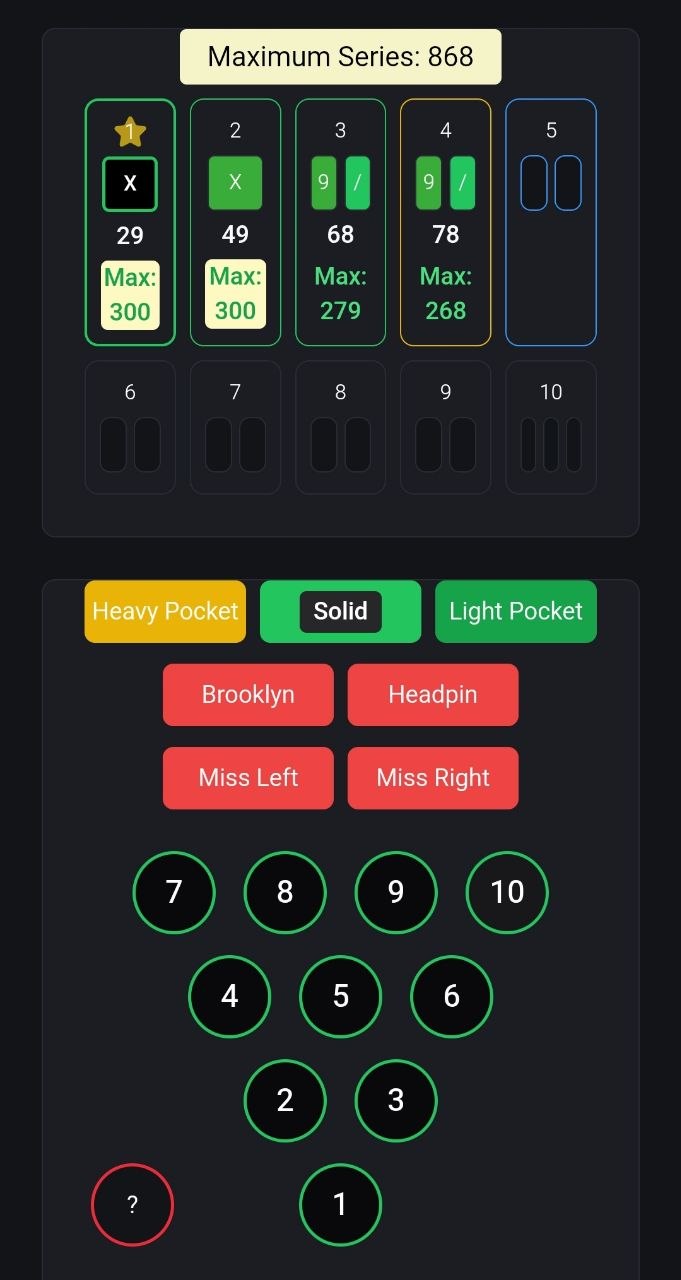
Seeing your performance data in context helps you make rational adjustments rather than emotional ones.
Bowlers who track their game consistently are harder to rattle, because they know what their numbers actually look like.
The Mental Game in Practice
You do not need to be a sports psychologist to bowl better mentally. You need a few habits:
- A consistent pre-shot routine you trust
- The discipline to reset after every frame, good or bad
- A process focus rather than a score focus
- Honest data about your game so you are not guessing
Bowling at a competitive level demands focus, composure, and the willingness to adjust between every frame.
A consistent mental approach only works if your physical game is repeatable. Read how to build a more consistent bowling approach and release.
Consistent Bowling Approach →Track Your Game. Improve Your Mind.
The KB App gives you the data to stay objective, adjust confidently, and build a mental game that is grounded in real performance, not guesswork.
Start your free 28-day trial. No credit card needed.